10 Appointment Setting Companies Compared for 2026
Compare appointment setting companies by service scope, fit, pricing model, and evaluation criteria, with published prices and the checks behind them.

Do appointment setting companies need to deliver more meetings, or take responsibility for the outbound work that produces useful sales conversations? Managed providers fit businesses that need execution handled. An AI CRM with managed outbound fits teams that want reps to prospect with better research, calling tools and follow-up support.
The right comparison starts with ownership, not meeting volume. Someone must build the list, approve the message, handle replies, qualify interest and explain why each meeting belongs on the calendar. An appointment setting agency may cover all that work, or only part of it. That scope matters more than a generic promise of “more pipeline,” because the buyer still owns the cost of poor fit, weak timing and calls nobody wants to take.
A useful comparison also separates the service from the system behind it. A managed floor can place trained SDRs on the customer's list, working inside a shared workspace. A software-led model gives the internal team the dialer, CRM, research, call review and follow-up support, then leaves the execution to those reps. Sales Montana covers both models: its power dialer and CRM support B2B teams, while its done-for-you service runs outbound inside the customer's own Sales Montana workspace.
The distinction matters because buyers do not reward irrelevant persistence. In its June 2025 buyer survey, Gartner reported that 73% of B2B buyers actively avoid suppliers that send irrelevant outreach. A rep who can explain the company, the person and the reason for the call has a better basis for earning attention than a rep working a raw list at speed.
A meeting is useful when the prospect understands the purpose and the seller understands the reason to talk.
The providers below differ in staffing, channels, reporting and commercial structure. Some suit companies buying a managed program with a named rep or team. Others make more sense when a sales leader wants dedicated SDR capacity or direct control over the workspace. Pricing also needs a careful read: a per-meeting fee rewards volume, a scoped engagement rewards clear boundaries, and a platform subscription shifts more execution back to the buyer. Confirm what is included, what counts as a qualified meeting, what channels are in scope and what happens when results fall short. Sales Montana, for example, agrees in writing on the qualification definition before work starts and does not guarantee meetings.
Pricing caveat: Published prices change, so buyers should get dated, written quotes from each provider before budgeting or signing.
1. Sales Montana
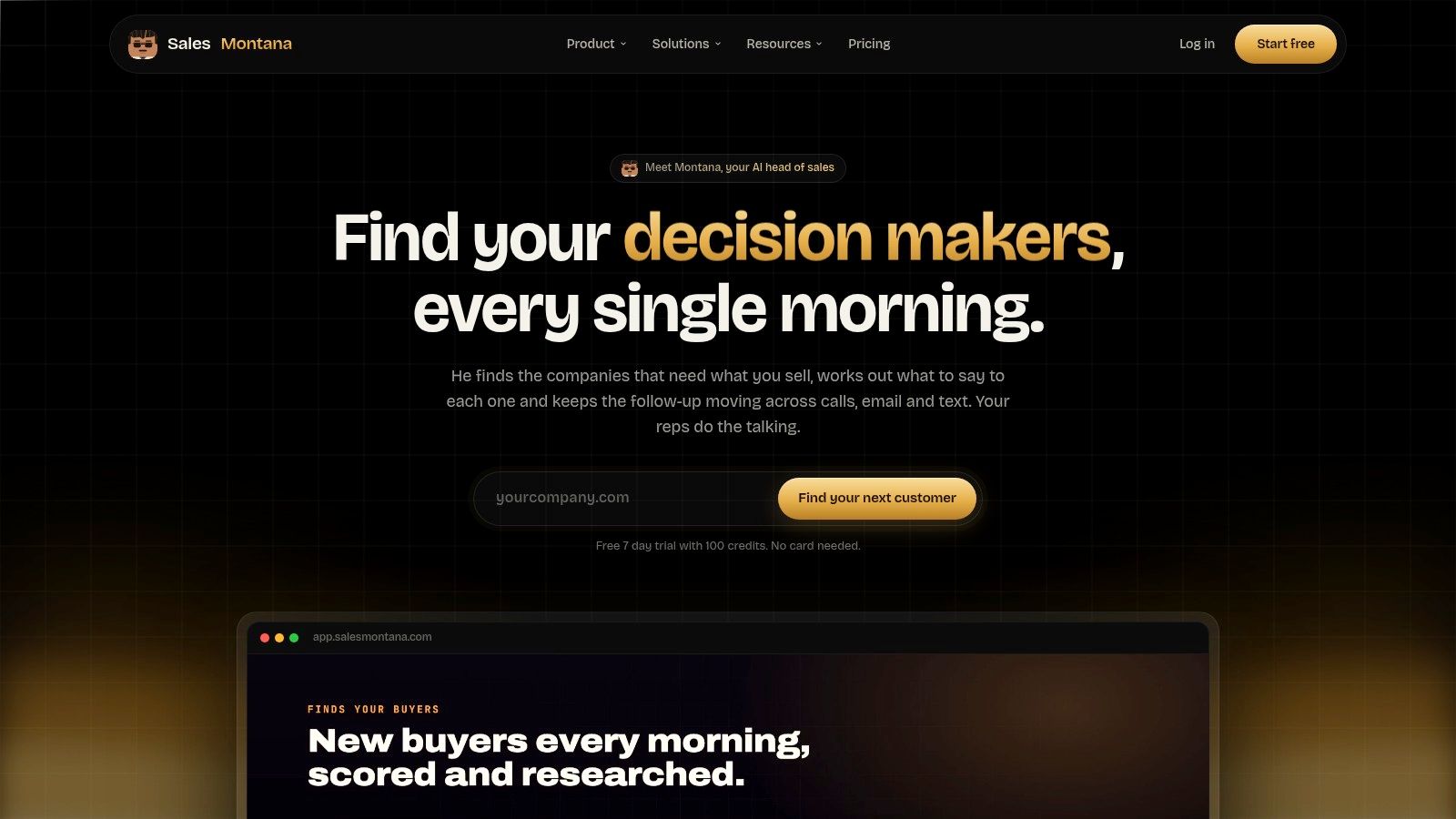
Sales Montana combines an AI CRM that runs itself with optional managed outbound. Montana, its AI head of sales, finds buyers, plans each rep's calls, emails, and LinkedIn touches, and prepares outcomes and deal updates after interactions. A human approves every send, and proposed CRM changes wait for the rep to tap Accept.
The outsourced sales team provides trained SDRs for businesses and agencies that want outbound done for them. A named rep or team works inside the customer's workspace, builds or enriches the list, refines scripts, makes calls, sends approved follow-ups, and books meetings.
Where the Model Fits
The workspace keeps calls, recordings, dispositions, and deal history visible. Before work starts, both sides agree in writing on what counts as a qualified meeting.
- Calling: A single-line power dialer operates in the browser, never parallel or predictive dialing.
- Channels: Calls, email from the rep's own mailbox, LinkedIn steps, and SMS after carrier registration.
- Commercial model: Done-for-you service is quoted per engagement, with one scope and no per-meeting fees.
The platform's published offer is Solo $49 a month (1 user), Team $99 a month (up to 3 users), Organization $297 a month (unlimited users, manager tools). It includes a 7-day free trial with 100 credits, no card needed; credits are included in paid plans, with additional usage billed pay as you go.
The trade-off: Software pricing doesn't include managed SDR staffing. The service doesn't guarantee meetings, and human approval remains part of the workflow, making it a weaker fit for buyers seeking autonomous sending or guaranteed calendar volume.
2. Belkins
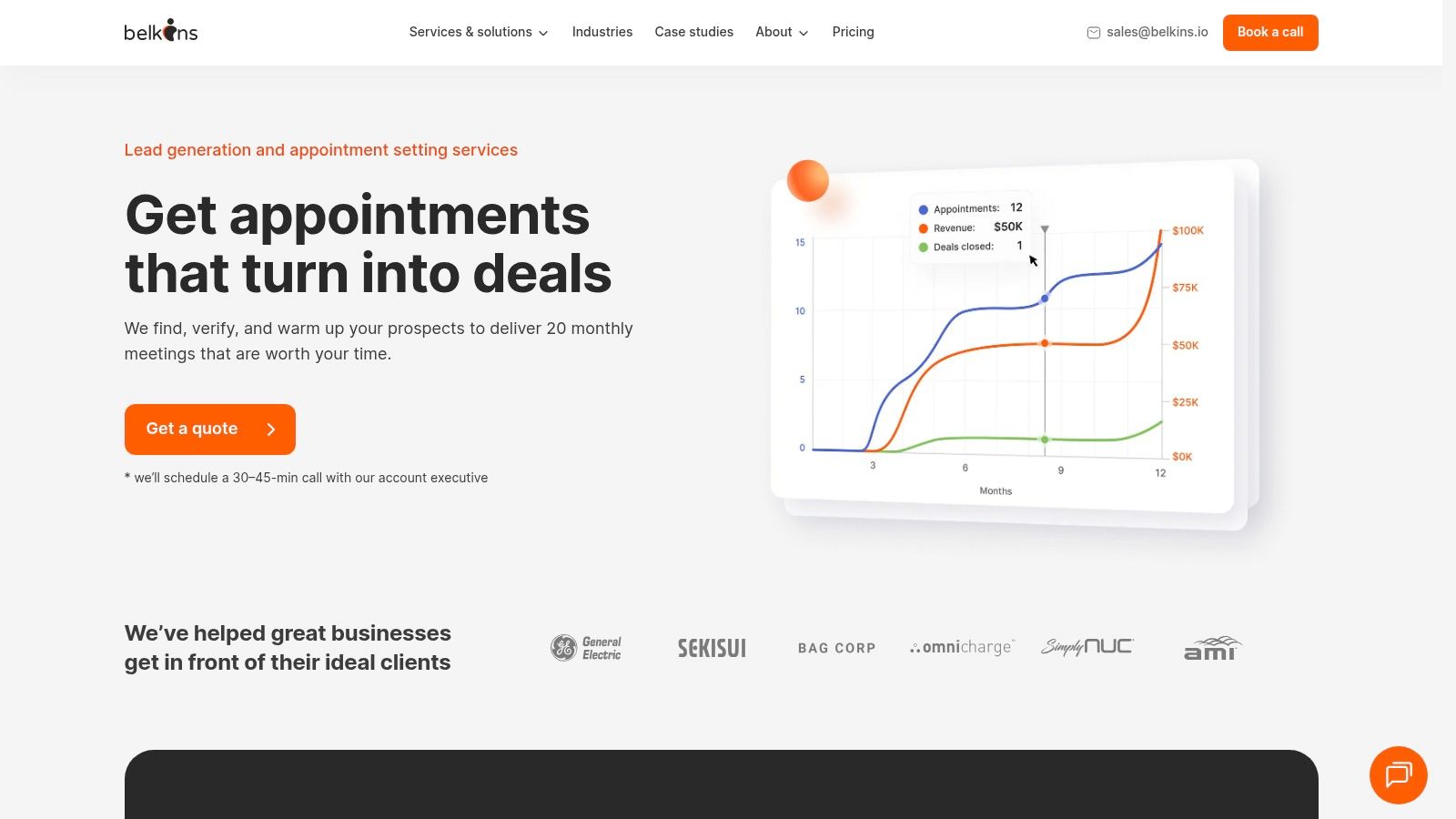
Belkins fits a business that wants a managed campaign rather than another tool to operate. Its scope covers prospect research, list validation, copywriting, outreach, qualification, and booking, with email, LinkedIn, and cold calling available within the program.
That breadth is useful when a founder has an offer and closing capacity but nobody responsible for daily prospecting. Follow-up and no-show recovery also matter because booking a calendar slot doesn't finish the handoff.
Compare the Billing Models Carefully
The reference figures associated with Belkins' appointment-setting service put standard service at an average starting point of $5,000, with a separate pay-per-appointment option starting at $750 per appointment plus a $1,500 one-time setup fee. These aren't interchangeable offers, and current rates and package requirements need written confirmation.
- Strong fit: Businesses wanting strategy, data preparation, messaging, and execution handled together.
- Main limitation: Custom service scope makes headline-price comparisons incomplete.
- Contract focus: Define qualification, no-show treatment, replacements, and what the starter package obligates the buyer to purchase.
Belkins is the better fit than a software-only option when nobody internally can manage outbound execution. It's the weaker choice when the buyer already has capable SDRs and mainly needs a unified workspace.
The practical outsourced SDR value comparison is whether the engagement replaces work the business would otherwise need to staff and manage, not whether the meeting fee looks attractive.
3. CIENCE
A company entering an adjacent market needs more than calendar access. The provider must understand which accounts belong in the campaign, who can influence the purchase, and what evidence makes a conversation worth booking.
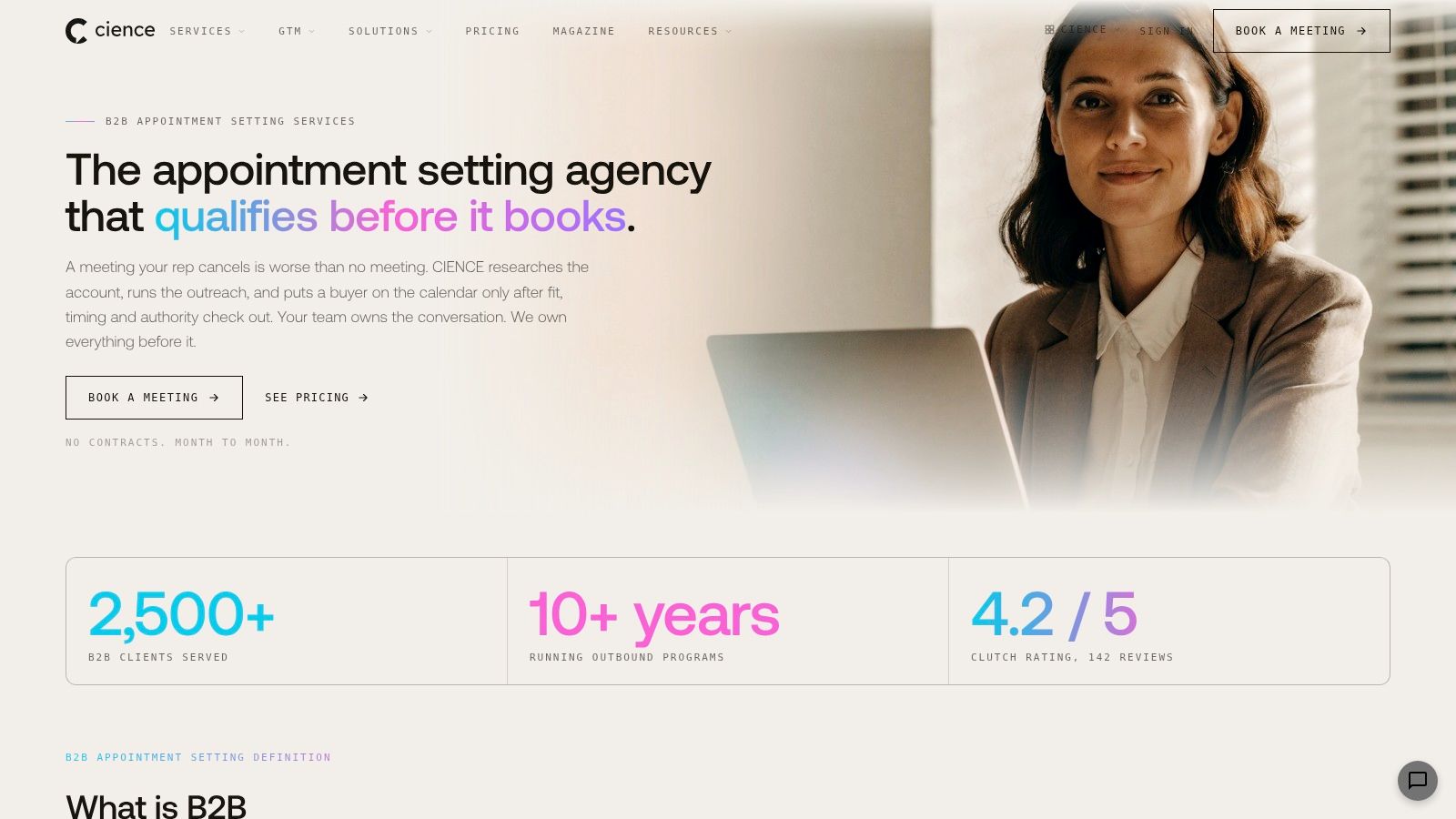
CIENCE offers managed B2B appointment setting through account research and outreach across email, phone, and social channels. Qualification criteria are agreed before outreach, and meetings can be placed directly on the client's sales calendar.
Practical rule: Agree on the qualification evidence before approving the first prospect list.
CIENCE is worth considering when the buyer needs broader lead-generation support alongside appointment setting. The stated month-to-month model can also suit a business that doesn't want to make an extended commitment before evaluating delivery.
Pricing is custom quoted for the appointment-setting scope described here. The proposal should separate SDR capacity, data work, platform access, channel execution, and campaign management rather than compressing everything into an unexplained monthly fee.
The weaker fit is a buyer seeking a simple, fixed package with immediately comparable capacity. Month-to-month language also doesn't answer every contractual question: billing dates, cancellation notice, launch charges, and responsibility for unfinished work still need explicit treatment.
CIENCE's strongest comparison point is the handoff. The closer should receive qualification notes and context, not merely an accepted invitation.
4. SalesRoads
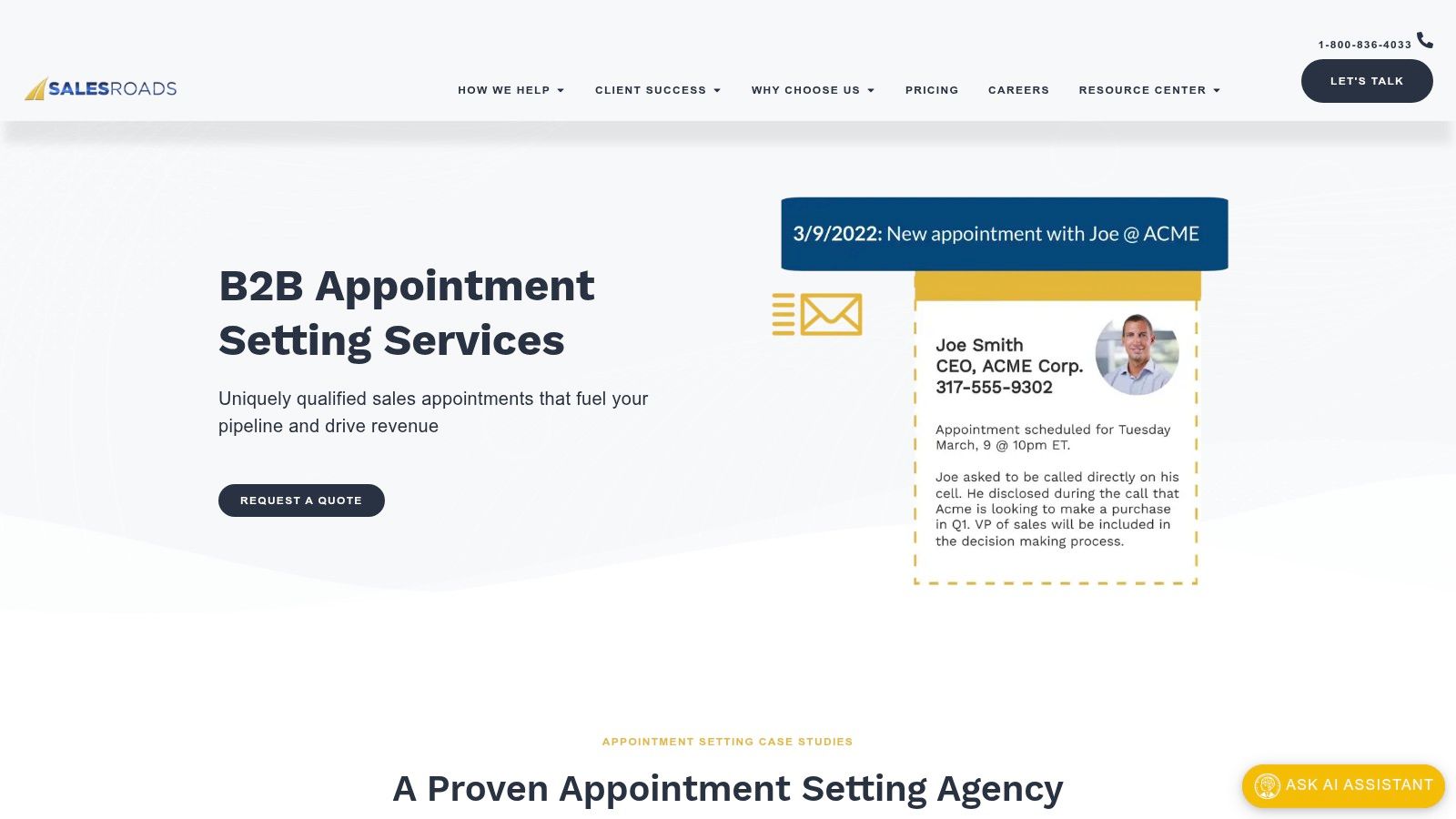
SalesRoads suits buyers who want calling supported by a managed SDR operation. Its appointment-setting programs combine outbound calling with AI-assisted email, playbook development, list preparation, qualification planning, and sales-operations support.
Fractional and full SDR configurations give buyers different ways to purchase capacity. That's useful when the sales leader needs prospecting coverage but can't yet justify the larger program.
Budget Against the Billing Period
Reference starting prices for SalesRoads' appointment-setting programs are $6,950 per four weeks for fractional SDR service and $9,500 per four weeks for a full SDR program. The billing unit matters: buyers shouldn't enter those figures into a budget as calendar-month charges without checking the agreement.
- Strength: SDR execution comes with supporting operational work, rather than calling in isolation.
- Better fit: Businesses with an offer that benefits from live qualification and a closer ready to handle the handoff.
- Weaker fit: Buyers seeking light-touch software access or a narrowly scoped prospect-list project.
The proposal should make the staffing configuration concrete. Fractional coverage needs defined responsibilities, availability, management support, and a clear escalation route when messaging isn't working.
Buyers should also distinguish list preparation from ongoing research. A launch list can become exhausted or reveal targeting problems, so responsibility for replacement accounts should be settled before the campaign begins.
5. EBQ
An appointment-setting problem can start outside the SDR team. If contact records are unreliable, CRM ownership is unclear, or marketing and sales use different account definitions, hiring callers won't settle those issues.
EBQ's appointment-setting service sits within a broader portfolio covering CRM, data, marketing, sales, and customer experience. Its staffing-based reference rates are $5,000 per month for half-time staffing and $10,000 per month for full-time staffing, associated with annual contracts paid monthly.
That model pairs dedicated SDRs with a business consultant and project management. Lead data and list building are included in the service description, alongside a repeatable cadence and launch process.
The Commitment Is Part of the Price
EBQ's strength is operational breadth. A business needing CRM support and outbound execution can evaluate related services through the same provider rather than coordinating disconnected suppliers.
The limitation is the commitment. Monthly payment shouldn't be mistaken for a monthly cancellation right, and staffing labels need to translate into actual hours, responsibilities, and coverage.
A suitable proposal should identify what happens during leave, who coaches the SDR, and whether data work reduces prospecting capacity. Those details determine what the staffing fee buys.
EBQ is a weaker choice for a buyer seeking a short market experiment with minimal contractual exposure. It becomes more compelling when the business has a sustained need and can use the broader revenue-support offering.
6. Callbox
Regional coverage is a real selection criterion when a company prospects beyond its home market. A campaign needs appropriate working hours, market context, and a handoff the receiving sales team can support.
Callbox provides managed B2B lead generation and appointment setting through coordinated phone, email, and LinkedIn outreach. Campaign planning and execution sit within the service, and its stated regional coverage makes it relevant to businesses targeting international markets.
Pricing is quote based. A useful quote should distinguish the work required for each target market rather than treating international coverage as a single feature.
- Best reason to shortlist: Regional campaign coverage alongside broader lead-generation support.
- Scope to separate: Prospect research, outreach, qualification, booking, and any work beyond the meeting.
- Main constraint: No standard appointment-setting package price is established here.
Callbox is the better fit when the buyer needs regional execution and coordinated channels. It's a weaker choice when the requirement is a narrow domestic calling campaign and the broader coverage offers little practical value.
The reporting specification matters as much as geography. Meetings booked, meetings held, and accepted sales opportunities should remain separate outcomes. Otherwise, a campaign can appear productive while the internal sales team rejects the handoffs.
The agreement should also identify which team owns replies that arrive outside the client's working day and how meeting context reaches the closer.
7. Abstrakt
Published packages make initial screening easier. They don't remove the need to read the qualification rules, especially when an appointment commitment forms part of the offer.
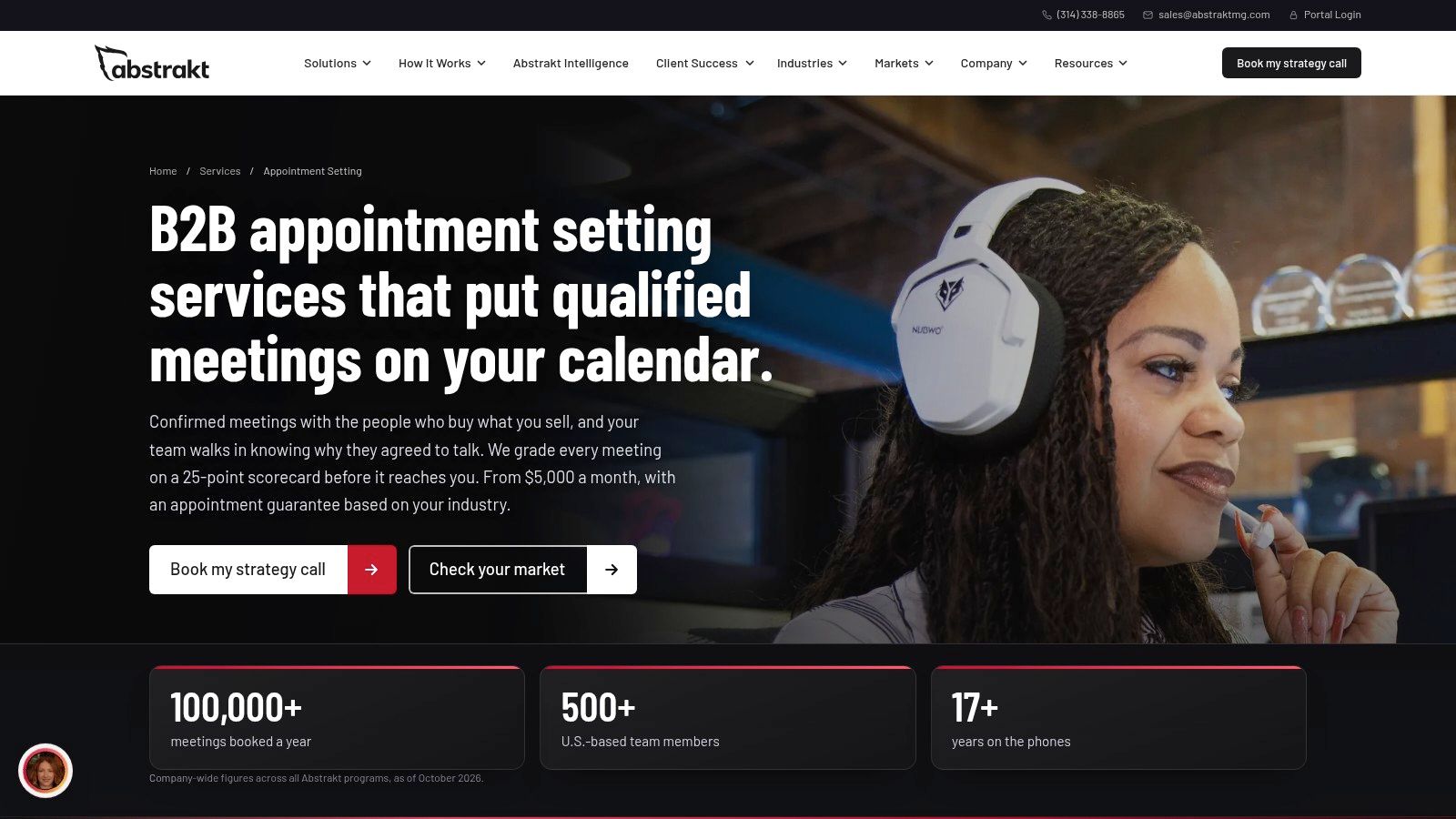
Abstrakt's B2B appointment-setting offering lists package reference prices of $5,250, $7,250, and $9,250. Billing terms, current package contents, and appointment commitments need direct confirmation before those figures become a purchasing basis.
Its service combines U.S.-based SDRs, targeted market research, outbound calling, and supporting channels such as email, LinkedIn, and direct mail. A reporting portal provides activity visibility, call recordings, appointments, and campaign reporting.
A guarantee deserves attention only after the buyer understands which meetings qualify and what remedy applies.
The stronger use case is a defined market with a complex sales conversation. Industry-specific programs can be relevant when the provider's targeting and scripts align closely with the buyer's actual sales process.
The weaker use case is limited prospecting support. A packaged program may include more coverage than the business needs, and published appointment targets shouldn't be treated as a prediction for a different offer or audience.
Before signing, the buyer should pin down the guarantee's eligibility rules, exclusions, measurement period, and remedy. A replacement appointment and a refund are different protections, and neither should be assumed from marketing language.
8. SalesHive
SalesHive gives buyers a managed SDR program with dedicated representatives, a strategist, outreach tools, and campaign reporting. Phone and email coverage depend on the selected plan, with meetings booked onto client calendars and campaign activity visible through its platform.
The commercial distinction is a custom flat monthly fee rather than per-appointment billing. SalesHive describes month-to-month and annual options, no setup fee, and client approval of the playbook and messaging before launch.
Flat Fees Still Need Output Accountability
A flat fee removes the direct incentive to invoice for every booked slot. It doesn't remove delivery risk, particularly because the service doesn't guarantee a fixed meeting count.
SalesHive's own cold-calling benchmark summary reports roughly 400 dials per meeting on average, a directional figure that illustrates why activity and meeting outcomes need separate reporting. That benchmark isn't a forecast for an individual engagement.
- Better fit: Buyers wanting managed calling, strategic support, and predictable billing structure.
- Weaker fit: Buyers whose purchasing requirement is a guaranteed meeting quantity.
- Contract priority: Define activity expectations, review cadence, cancellation notice, and qualification evidence.
The handoff should match the client's internal roles. An SDR, BDR, and AE role comparison helps clarify whether the provider stops at qualification or supports additional follow-up.
That boundary should be written into the scope. Otherwise, both teams may assume the other owns a positive reply that hasn't yet become a meeting.
9. memoryBlue
Dedicated staffing is memoryBlue's main comparison point. Its outsourced SDR model assigns representatives to a single client rather than splitting those SDRs across client accounts.
memoryBlue's SDR services include outbound prospecting, qualification, and appointment setting through phone, email, and LinkedIn. Separate services can extend support into pipeline progression and closing, while the appointment-setting engagement is custom quoted.
Dedicated allocation can make sense for a product that requires substantial learning. The SDR needs enough familiarity to recognize a useful objection, distinguish buyer roles, and explain the meeting without defaulting to a generic script.
Buy the Right Stage of Support
A business with experienced account executives may need only prospecting and qualification. A founder without later-stage sales capacity has a different requirement and shouldn't assume appointment setting includes deal progression.
The advantage is continuity and room for a broader relationship. The limitation is that a custom staffing engagement can be more involved than a tightly bounded meeting-booking service.
The proposal should identify the staffing allocation, launch process, product training, management responsibilities, and contract commitment. It should also explain how account knowledge is retained if the assigned SDR changes.
memoryBlue is the better fit when dedicated representation and product familiarity matter more than buying a simple package. It's the weaker fit when the buyer needs only occasional booking support and won't use the broader sales-development capacity.
10. Sales.co
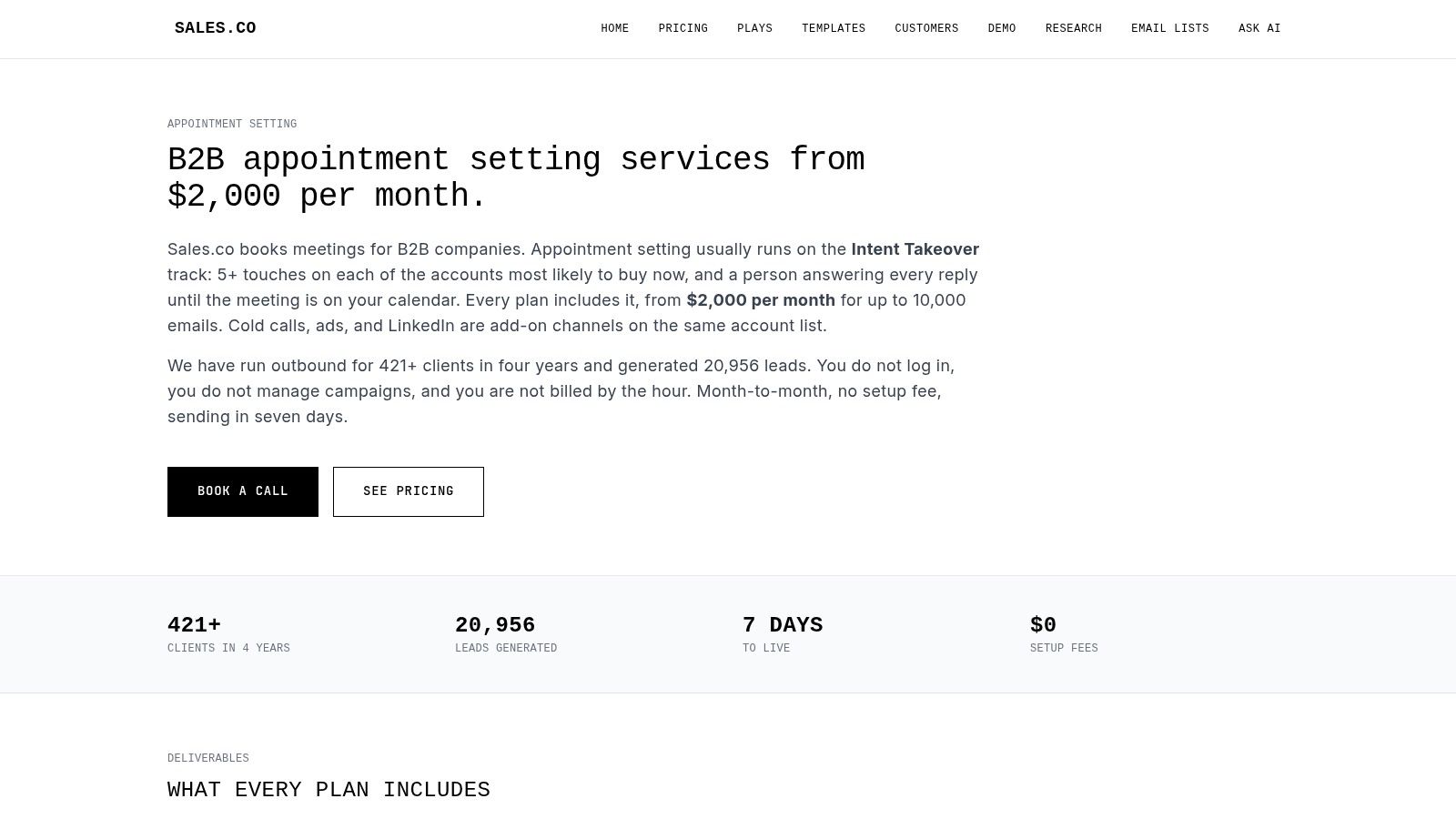
Sales.co offers an email-led entry point with optional channel expansion. Its scope includes lead selection, outreach infrastructure, handling prospect replies, and follow-up intended to turn interest into booked conversations.
The reference offer on Sales.co's appointment-setting page lists Intent Takeover at $1,000 per month, with cold calling available for an additional $1,500 per month. LinkedIn and ads are also offered as add-on channels, and the described terms are month-to-month with no setup fee.
Compare the Finished Scope
The base offer and a multichannel program aren't the same purchase. A buyer who needs calling from launch should compare the complete proposed scope against other managed providers, not the entry rate alone.
- Strong fit: Businesses seeking email-led outreach with the option to add channels.
- Useful distinction: Reply handling is part of the workflow, rather than leaving every response with the client.
- Weaker fit: Businesses seeking a dedicated, full-time SDR team as the core service.
Intent also needs a concrete meaning. The buyer should understand why accounts were selected, how recently the underlying signal occurred, and whether the contact's role fits the offer.
No-show handling, qualification criteria, reporting access, and ownership of campaign assets belong in the agreement. Month-to-month terms reduce commitment, but they don't settle what happens to mailboxes, prospect records, or active conversations when the engagement ends.
How the 10 appointment setting companies compare on channels, pricing model, published prices, and contract terms
| Item | Channels | Pricing model | Published starting price | Contract terms |
|---|---|---|---|---|
| Sales Montana | Calls, email, LinkedIn | Quoted per engagement for done-for-you; software sold separately | Software: Solo $49, Team $99 and Organization $297 a month; done-for-you quoted per engagement | Software: 7-day free trial with 100 credits, no card needed; done-for-you terms set in the written scope |
| Belkins | Email, LinkedIn, cold calling | Managed service; optional pay-per-appointment | $5,000 average; $750 per appointment plus $1,500 setup for the pay-per-appointment option | Confirm billing period, notice period and campaign commitment before signing |
| CIENCE | Email, phone, social | Custom-quoted managed service | No published price | Month to month |
| SalesRoads | Outbound calls, email | Fractional or full SDR program | $6,950 per four weeks for fractional; $9,500 per four weeks for full SDR program | Confirm billing period, notice period and program commitment before signing |
| EBQ | Outbound outreach; specific channels not stated | Staffing-based | $5,000/month half-time; $10,000/month full-time | Annual contracts, paid monthly |
| Callbox | Phone, email, LinkedIn | Custom-quoted managed service | No published price | Confirm billing period, notice period and campaign commitment before signing |
| Abstrakt | Calls, email, LinkedIn, direct mail | Published package pricing | $5,250/month | Billing terms and commitments should be confirmed |
| SalesHive | Phone, email | Custom flat monthly fee | No published price | Month-to-month and annual options |
| memoryBlue | Phone, email, LinkedIn | Custom-quoted outsourced SDR service | No published price | Confirm billing period, notice period and program commitment before signing |
| Sales.co | Email; cold calling, LinkedIn, and ads available as add-ons | Monthly plan with channel add-ons | $1,000/month; cold calling adds $1,500/month | Month to month; no setup fee |
The table shows why buyers should compare scope before price. One provider may publish a software rate and quote managed execution separately. Another may publish a managed-service floor but charge for channels as add-ons. Those are different purchases.
Sales Montana sits in the first group. The platform is an AI CRM and power dialer, and the done-for-you service uses trained SDRs inside the customer's own workspace. The software prices are published; the outsourced SDR engagement is quoted. That matters when budgeting because the buyer is comparing software access against managed execution, not one flat service fee.
Belkins, CIENCE, SalesRoads, EBQ, Callbox, Abstrakt, SalesHive, memoryBlue and Sales.co sell managed appointment setting in some form. Their channel coverage still differs. Email and calling are common. LinkedIn appears with several providers. Direct mail and ads are narrower add-ons. Buyers should match those channels to the way their buyers respond.
Pricing model matters as much as the number. A per-appointment price makes volume easier to forecast, but it can create disputes over qualification. A flat monthly retainer gives the buyer a clearer spend, but the agreed scope must state what the team will do each month. Staffing-based pricing fits a company that wants capacity, while add-on pricing fits a company that wants to start narrow and expand later.
Contract terms deserve the same attention as the quote. Month-to-month terms reduce commitment, though they still leave questions about notice, handoff and access to campaign assets. Annual terms can suit teams planning a long run, but they raise the cost of a poor fit. Where the provider has not stated terms in the comparison, confirm billing period, notice period and any campaign commitment before signing.
For Sales Montana, the written scope settles what counts as a qualified meeting before work starts. That is the practical line between a booked conversation and a billable result. The provider does not guarantee meetings. A buyer should also confirm whether the quoted engagement covers one named rep or a whole team, since that changes execution capacity.
The useful shortlist comes from three decisions: who runs outreach, which channels are in scope, and how the provider charges when results vary. Once those are clear, the table becomes a way to check fit rather than a hunt for the lowest headline price.
Choose the Model Before You Compare the Price
Choose who owns outbound before comparing rates. A managed provider fits a company that needs research, outreach, qualification, and booking handled. An AI CRM and power dialer fit a company whose own reps can execute but need better preparation and less administrative work.
A hybrid model can cover gaps without forcing the business to rebuild its process. Trained SDRs can provide execution while the customer retains visibility into the workspace, calling history, and handoff.
Put the Buying Decision in Writing
The qualified-meeting definition should name account fit, acceptable roles, the business problem, and the prospect's understanding of the meeting. It should also explain how wrong contacts, duplicate accounts, no-shows, and rejected meetings are recorded and resolved.
- Scope: Specify channels, research, data preparation, reply handling, and calendar management.
- Capacity: Identify assigned staffing, coverage, coaching, and absence arrangements.
- Control: Document message approval, access to recordings, and ownership of records.
- Commercial terms: Confirm billing periods, cancellation notice, launch charges, and the start date.
Calling practices deserve a separate review. The FTC's telemarketing rule document sets an abandoned-call limit of 3% of calls answered by a person, measured over a 30-day period; buyers should establish which rules apply to their campaign rather than treating dialer speed as the only concern.
Human approval and compliant outreach aren't interchangeable either. Approval helps control inaccurate claims and inappropriate targeting, but the provider still needs procedures for suppression lists, calling hours, recording obligations, and texting registration.
Judge the Handoff, Not the Calendar
A useful handoff tells the closer why the prospect agreed, what was discussed, and what remains uncertain. A calendar invitation without that context leaves the sales team repeating discovery or repairing expectations.
Sales Montana agrees on qualified-meeting criteria before work starts and keeps execution inside the customer's workspace. Its single-line calling model and approval workflow offer a concrete option for buyers prioritizing visibility, although it doesn't guarantee meetings.
Other providers may be better when international coverage, dedicated staffing, broader revenue operations, or a particular managed-service package matters more. The right choice depends on the work the business needs someone to own.
Compare dated quotes against the same written scope. The meaningful price is the cost of an inspectable outbound program that produces relevant conversations, not the lowest number beside a meeting target.
Sales Montana offers an AI CRM, a single-line power dialer, and trained SDRs for businesses that want outbound handled inside their own workspace. Visit Sales Montana to compare the platform with done-for-you outbound and discuss the qualification criteria, channels, and scope needed for the campaign.
Let Montana run your outbound
Leads, calls, email and LinkedIn in one place. 7 day free trial with 100 credits, no card needed.
Larger team? Book a demo